
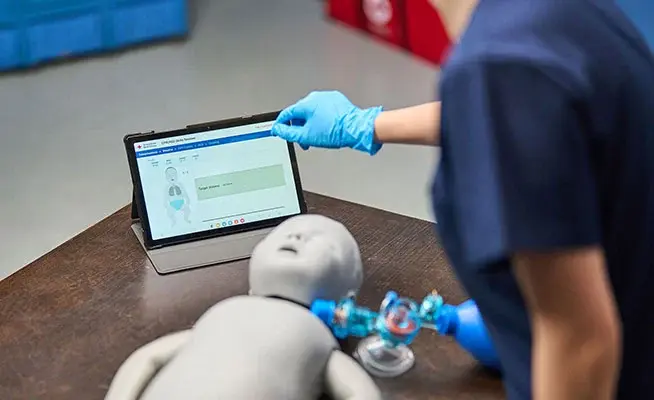
For fire departments, hospitals and public-safety organizations, CPR training is essential, but keeping an entire team trained and confident can be difficult. Employees work different shifts, emergency calls can interrupt scheduled classes, and coordinating instructors, classrooms and staff availability can quickly become complicated.
SmartCPR offers a more flexible approach to CPR skills practice. By giving employees convenient access to hands-on training with immediate performance feedback, organizations can reinforce lifesaving skills while reducing many of the scheduling challenges associated with traditional classroom training.
Flexible CPR Training for Demanding Schedules
Emergency-response and healthcare teams rarely operate on a traditional 9-to-5 schedule. Firefighters, nurses, EMS professionals, police officers and other public-safety employees may work nights, weekends, rotating shifts or extended schedules.
Coordinating a traditional CPR class around those schedules can require pulling multiple employees away from their responsibilities at the same time.
SmartCPR allows organizations to provide shorter, skills-focused training opportunities that can be incorporated more easily into an employee's schedule. Instead of waiting for a large group class, team members can practice CPR skills when it works for their shift and their organization.
This flexibility can be especially useful for departments managing multiple crews, hospital employees working across several shifts or public-safety agencies that need to keep personnel available for emergency response.
Immediate Feedback Helps Strengthen CPR Skills
CPR is a physical skill. Knowing the steps is important, but effective CPR also depends on performing those steps correctly.
SmartCPR provides immediate feedback during practice, helping participants evaluate important components of CPR performance and make adjustments while they train.
Instead of practicing and wondering whether their technique is correct, employees receive feedback that helps them identify areas that may need improvement.
Frequent, feedback-driven practice can help reinforce proper CPR technique and give employees more opportunities to build confidence before they are faced with a real emergency.
Reinforce Skills Between Traditional Training Sessions
CPR skills can decline over time when they are not practiced regularly. For organizations whose employees may need to respond to a cardiac emergency, waiting until the next certification or renewal course to practice may leave a significant gap between training sessions.
SmartCPR can help organizations introduce more frequent skills reinforcement.
Firefighters may practice during station downtime. Hospital employees may complete shorter sessions around their shifts. Public-safety personnel can refresh their skills periodically instead of relying solely on a single training event.
These shorter practice opportunities help keep CPR skills familiar and give organizations another way to promote ongoing emergency preparedness.
SmartCPR for Fire Departments
Fire departments face a unique training challenge. Personnel need to remain prepared while also staying available for emergency calls.
Scheduling a full department or multiple crews for traditional classroom training can require significant coordination.
SmartCPR can give departments another option for maintaining CPR readiness by allowing firefighters to practice skills in shorter sessions throughout the year.
Departments can use SmartCPR to:
- Flexibility to customize CPR practice for 6 months to 2 years
- Accommodate multiple shifts and rotating crews
- Reduce the need to coordinate large training groups
- Reinforce CPR skills between certification courses
- Give personnel immediate feedback on their performance
For training officers, this can make ongoing CPR skills development easier to incorporate into an existing training program.
SmartCPR for Hospitals and Healthcare Facilities
Hospitals operate around the clock, which can make mandatory training difficult to schedule.
Nurses, technicians, clinical staff and other employees may work days, nights, weekends or rotating schedules. Removing multiple employees from patient-care responsibilities at the same time can also create operational challenges.
SmartCPR provides a more flexible way for healthcare organizations to offer CPR skills practice.
Employees can complete training sessions around their schedules, while facilities can provide more frequent opportunities to reinforce critical resuscitation skills without relying exclusively on large classroom sessions.
For smaller hospitals and healthcare facilities with limited training resources, that flexibility can be particularly valuable.
SmartCPR for Police and Public-Safety Organizations
Police officers and other public-safety professionals are often among the first people to arrive at an emergency.
Maintaining strong CPR skills can help personnel feel better prepared to respond when someone experiences sudden cardiac arrest.
SmartCPR can help public-safety agencies provide regular CPR practice without repeatedly coordinating full traditional classes.
Shorter training sessions can be incorporated into existing professional development or skills-training programs, giving personnel additional opportunities to maintain their CPR abilities throughout the year.
Centralized Training Oversight
Managing training across multiple employees, shifts or locations can become complicated quickly.
SmartCPR helps organizations take a more organized approach by providing centralized oversight of employee training activity.
Training managers can more easily monitor participation and maintain visibility into skills practice across their workforce. For larger departments or organizations managing employees at multiple locations, this can simplify administration while helping leadership identify where additional training may be needed.
Centralized oversight can be especially useful for training officers, department leadership, HR teams and healthcare education departments responsible for maintaining workforce readiness.
Build a More Flexible CPR Training Program
Traditional instructor-led CPR courses remain an important part of certification and professional training. SmartCPR can complement those programs by creating additional opportunities for employees to practice and reinforce their skills.
For fire departments, hospitals and public-safety agencies, the result can be a CPR training strategy that is easier to schedule, easier to manage and more focused on maintaining skills throughout the year.
Instead of treating CPR as something employees practice only when certification is due, organizations can make hands-on skills reinforcement a more regular part of workplace training.
Want to learn whether SmartCPR is a good fit for your organization?
